NEW miniature on-skull digital headstages...
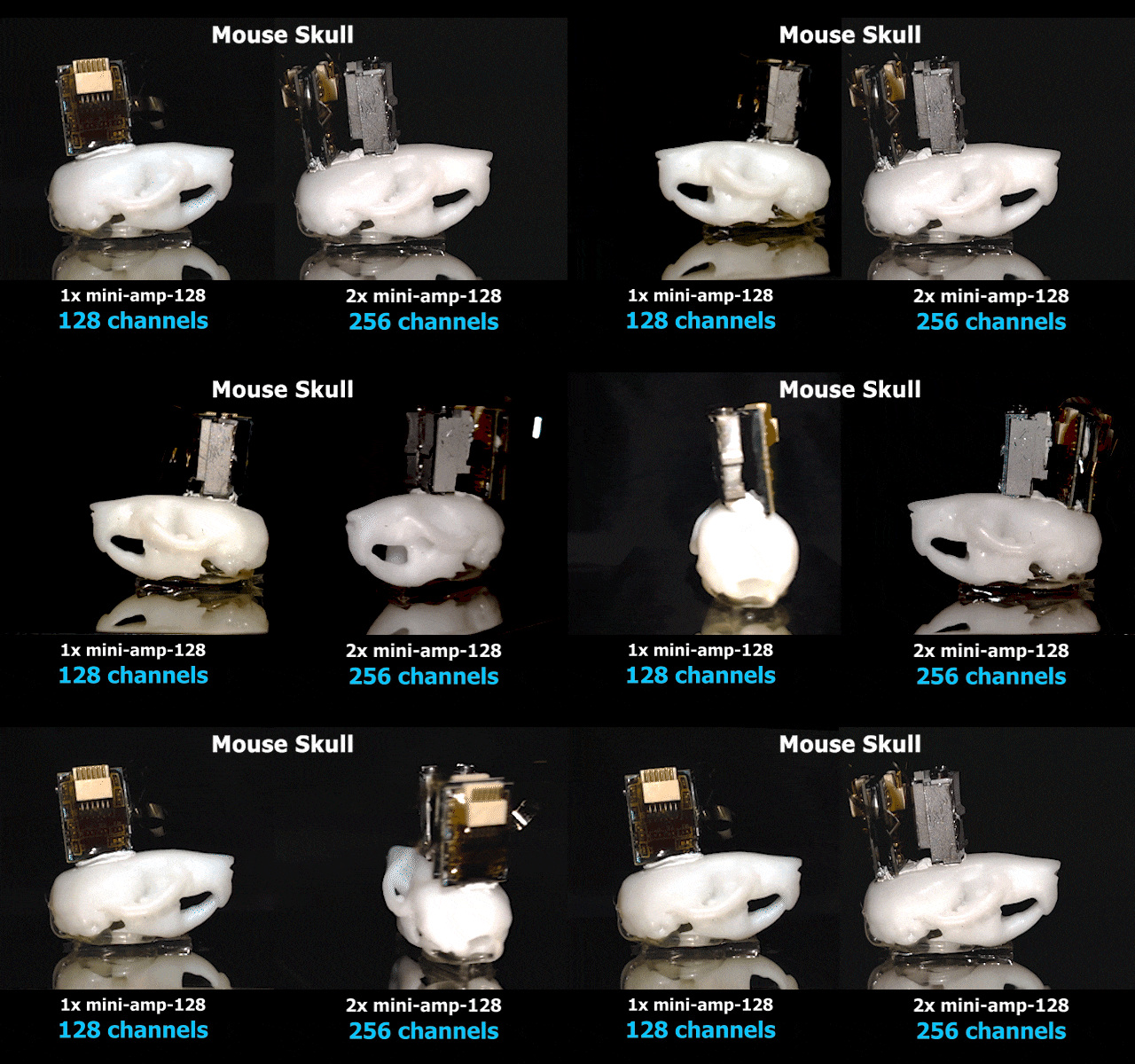
Implantable and reusable miniature digital headstage for 64 - 256 channels for freely-behaving mice; for use with all of our silicon neural probes.
Space and weight saving (0.34 grams; small-footprint 2x7 mm; 64 channels or 2x8 mm; 128 channels), mechanical-stress avoided by removing bulky connectors from the equation with high-channel count electrophysiology opened up for the smallest of lab animals - learn more here...
With our comprehensive probe library to choose from, you'll be able to optimise electrode placement across a wide range of brain areas, thereby ensuring as many as electrodes as possible are actually on-target.
Double your data with our Double-Sided Probes

Record hundreds of neurons at a time with unparalleled resolution...
With electrodes on both sides of the probe, you'll be able to record a LOT MORE neurons from the same brain area, exponentially increasing the likelihood of recording from inter-connected pairs and of course building up your basic 'n'-numbers much faster too meaning you can get to your data analysis with greater speed.
Keep Calm and Neur On
No matter what the world throws at you during these uncertain times, we'll continue making and shipping our world-beating silicon neural probes along with the rest of our range of cool neuro-tools.
If you're currently planning experiments, writing funding applications, or would like to discuss any other aspect of using our tools, please reach out to us as we'd love to hear from you.
Alternatively, check out our Knowledge Base for the inside-track on key know-how and much more.